 Język Polski
 English
Conferences and discussions
Annual scientific conferences are organized under the auspices of the editorial board. The speeches of the speakers form the basis for the preparation of the thematic sections of the journal in the following year.
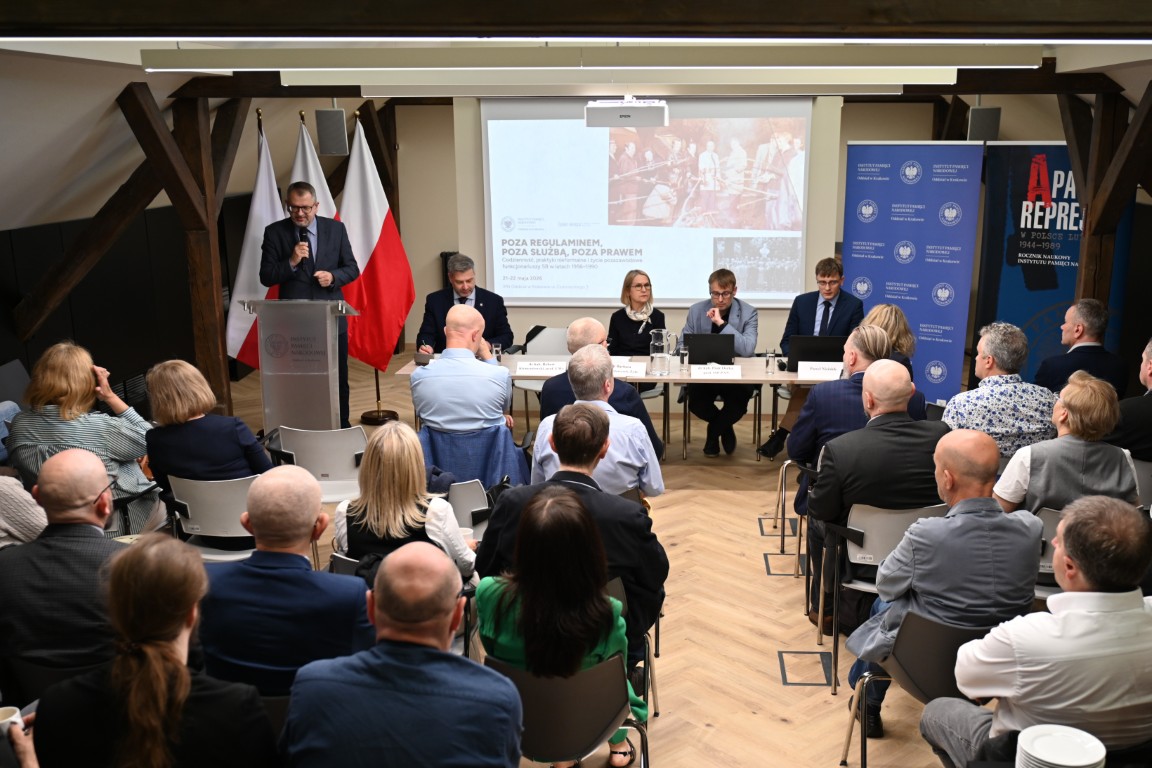
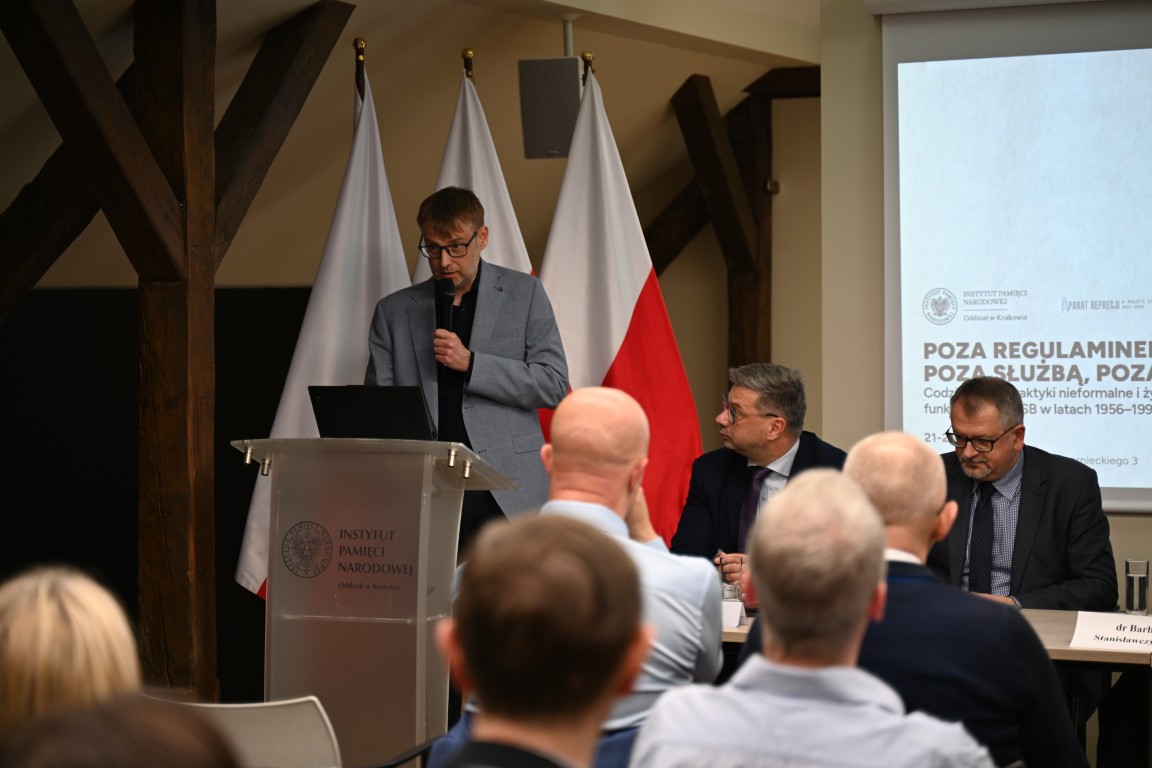
May 21–22, 2025 - Cracow – Scientific Conference „Beyond regulations, beyond duty, beyond the law. The daily lives, informal practices, and personal lives of Security Service officers from 1956 to 1990”.
A report from the conference is available on the IPN's website
On November 26-28, 2025, the 14th international scientific conference in the “Need to Know” series, devoted to the history of intelligence and counterintelligence in the 20th century, took place. On the first day, the proceedings took place in the conference room of the historic headquarters of the Krakow Branch of the Institute of National Remembrance at 3 Stefana Czarnieckiego Street. The remaining two days were held at the Golden Tulip Krakow-Kazimierz Hotel at 28 Krakowska Street.

The theme of this year's edition is “In a world of mirrors. Intelligence and Disinformation.” Many still consider the Cold War to be the apogee of both intelligence warfare and disinformation campaigns. In recent years, the topic has become very relevant again due to widespread suspicions that Russia is using similar methods to influence the politics of other countries in Europe and around the world. For intelligence researchers, security agencies, and societies, the relationship between intelligence services and disinformation poses a serious challenge. It is often difficult to answer honestly when foreign intelligence services are spreading false information and when other actors are responsible for it. The consequences of this dilemma are not purely academic, as they determine whether disinformation should be treated as a special threat by counterintelligence organizations or whether it should be openly discussed by other social institutions and even by individual citizens. During the Cold War, both the East and the West preferred the former option, albeit to varying degrees.
The event was organized by the Institute of National Remembrance in cooperation with the University of Southern Denmark (Odense, Denmark), King's Centre for the Study of Intelligence, King's College London (United Kingdom); the International Center for Defense and Security (Tallinn, Estonia), and the Ludwig Boltzmann Institute for the Research on Consequences of War (Graz, Austria). An additional partner of this year's edition is the Institute for the Study of Totalitarian Regimes (ÚSTR, Prague, Czech Republic).
A report from the conference is available on the IPN's website
September 3, 2025, Warsaw – interview with Dr. habil. Filip Musiał, editor-in-chief of the yearbook "Aparat Represji w Polsce Ludowej 1944-1989" ("The Apparatus of Repression in People's Poland 1944-1989"), conducted as part of the series "Książki pełne historii" ("Books Full of History").
May 22–23, 2025 - Cracow – Scientific Conference „The hunt for spies! Soviet-type counter-espionage in Poland and the world”.
A report from the conference is available on the IPN's website


June 6–7, 2024 - Lublin – International Scientific Conference „The apparatus of repression – the executive body in the Soviet system – history and research perspectives”.
Information about the Conferrence


May 18-19, 2023 - Krakow - Nationwide Scientific Conference "Behind the scenes of the security service. UB-SB auxiliary units against the background of the daily functioning of the repressive apparatus of the People's Republic of Poland (1944-1990)".
May 26-27, 2022 - Krakow - Nationwide Scholarly Conference "In the web of dependence. Relations of the Security Office/Service with other institutions of "people's" Poland and the secret services of the Soviet bloc countries".
Conferrence program and report
May 27, 2021 - Krakow - Nationwide Scientific Conference "Security Service in 1975-1990".
Discussion around No. 20 (2022) of the annual „Aparat Represji w Polsce Ludowej 1944–1989”
Participans: dr Witold Bagieński, dr hab. Władysław Bułhak, dr hab. Mariusz Krzysztofiński, dr hab. Cecylia Kuta. Chairing: dr Grzegorz Wołk
Discussion around No. 18 (2020) of the annual „Aparat Represji w Polsce Ludowej 1944–1989”
Participants: dr hab. Władysław Bułhak, dr Piotr Chmielowiec, dr hab. Adam Dziurok, dr hab. Filip Musiał, dr Paweł Skubisz. Chairing: Rafał Dudkiewicz
Most read (last 6 months)
 2867
2867 Ministry of Education and Science evaluation points:
40 (2024)
Research areas: humanities
Disciplines: history, security studies, political science and public administration
Editor-in-chief: Dr. habil. Filip Musiał
http://aparatrepresji.ipn.gov.pl

- Institute of National Remembrance
Commission for the Prosecution
of Crimes against the Polish Nation
1 Janusza Kurtyki Str.
02-676 Warsaw (Poland)
NIP: 525-21-80-487
- tel.: +48 22 581-87-78/77/76
e-mail: wydawnictwo@ipn.gov.pl
